
Winner - SOM Outstanding
Occupational Health Team 2025
Occupational Health Team 2025
Our Brands


May 15, 2026
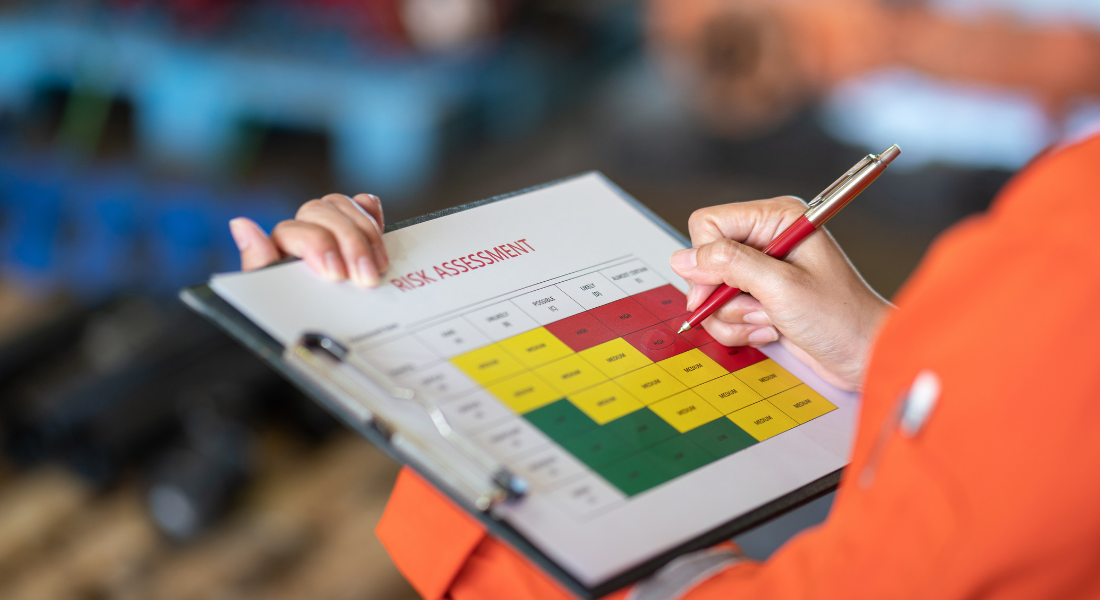
Managing hazardous substances in the workplace is a core responsibility for HSE managers. As regulatory expectations increase and supply chains become more complex, spreadsheets and paper-based systems are no longer sufficient. Modern chemical risk assessment software provides a more efficient, accurate, and compliant way to manage workplace exposure risks.
However, the most effective systems don’t just focus on chemicals in isolation - they focus on the task being carried out involving the chemical. This distinction is critical to producing realistic, proportionate, and defensible risk assessments.
This guide explains how task-based chemical risk assessment software improves safety outcomes, supports compliance with COSHH, and helps organisations move beyond overly generic chemical-centric approaches.
Chemical risk assessment software is a digital system that helps organisations identify, evaluate, and control risks associated with hazardous substances in the workplace, in line with UK COSHH (Control of Substances Hazardous to Health) regulations.
Rather than simply listing chemicals and their hazards, modern systems assess how the chemical is being used in a specific task, ensuring risks are evaluated in real-world conditions.
For HSE managers, this means:
Under UK law, employers must assess and control exposure to hazardous substances. The Health and Safety Executive (HSE) states that thousands of workers develop work-related ill health each year due to exposure to chemicals and dusts.
Failure to manage these risks can result in:
Traditional systems often focus heavily on the chemical hazard itself. While important, this can lead to generic or overly cautious control measures that don’t reflect real working conditions. Software solutions help organisations move from reactive compliance to proactive risk management.
Not all systems are equal. When evaluating a solution, HSE managers should focus on functionality that supports both compliance and usability.
1. Task-Based Risk Assessment Engine
The most important feature is the ability to structure assessments around tasks, not just substances.
This enables systems to:
2. Centralised Chemical Inventory
A robust platform allows you to:
This is particularly valuable for organisations with multiple locations or complex operations.
3. Automated Risk Assessment Tools
Modern systems streamline the assessment process by:
This reduces human error and ensures consistency across assessments.
4. COSHH Compliance Support
Software should align with UK COSHH requirements by enabling:
You can explore our dedicated iCOSHH solution.
5. Integration with Industrial Hygiene Data
For organisations managing complex exposure risks, integration with industrial hygiene monitoring is essential.
This may include:
Linking this data with risk assessments provides a more complete picture of workplace health risks.
6. Reporting and Analytics
Strong reporting tools allow HSE managers to:
Look for dashboards that present data clearly without requiring advanced technical skills.
Improved Efficiency
Manual processes are time-consuming. Software reduces administrative burden, allowing HSE professionals to focus on higher-value activities such as risk reduction and employee engagement.
Greater Accuracy and Consistency
Automated systems minimise:
This is especially important when managing large volumes of chemical data.
More Realistic Risk Assessments
By focusing on tasks, organisations avoid overgeneralised assumptions about chemical hazards and instead reflect how work is actually performed.
With built-in regulatory frameworks, software helps ensure assessments meet current UK standards. This is critical given the evolving nature of workplace health legislation.
Better Employee Protection
Ultimately, the goal is to protect workers. By improving visibility and control of chemical risks, organisations can reduce incidents of occupational illness.
The term COSHH is increasingly associated with integrated occupational safety and health solutions. These platforms go beyond basic compliance tools by combining:
This integrated approach allows organisations to:
For HSE managers, this means moving from siloed systems to a unified view of workplace health.
Chemical risk assessment software is evolving beyond simple chemical inventories. The most effective systems are task-focused, ensuring that risk assessments reflect how substances are actually used in the workplace.
By shifting from a chemical-centric to a task-based approach, organisations can:
Ultimately, this approach supports safer, more efficient, and more realistic management of hazardous substances in the workplace.